
Does AI recommend your brand?
See how Google AI Overviews, Copilot Search and ChatGPT describe your organization and its competitors. We compare those answers with analytics, search data and a website audit to identify what to improve.
AI answers backed by evidence
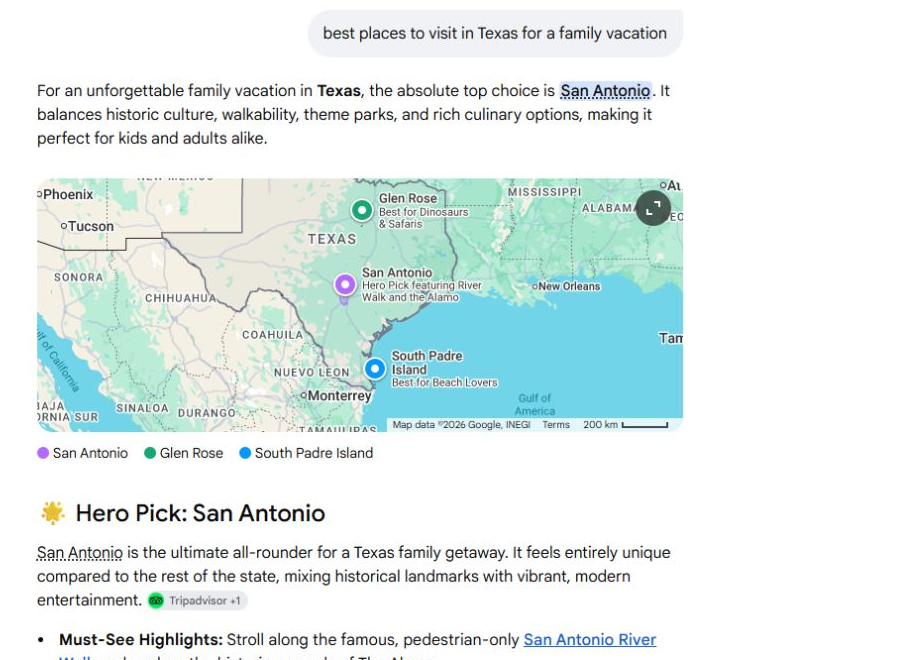
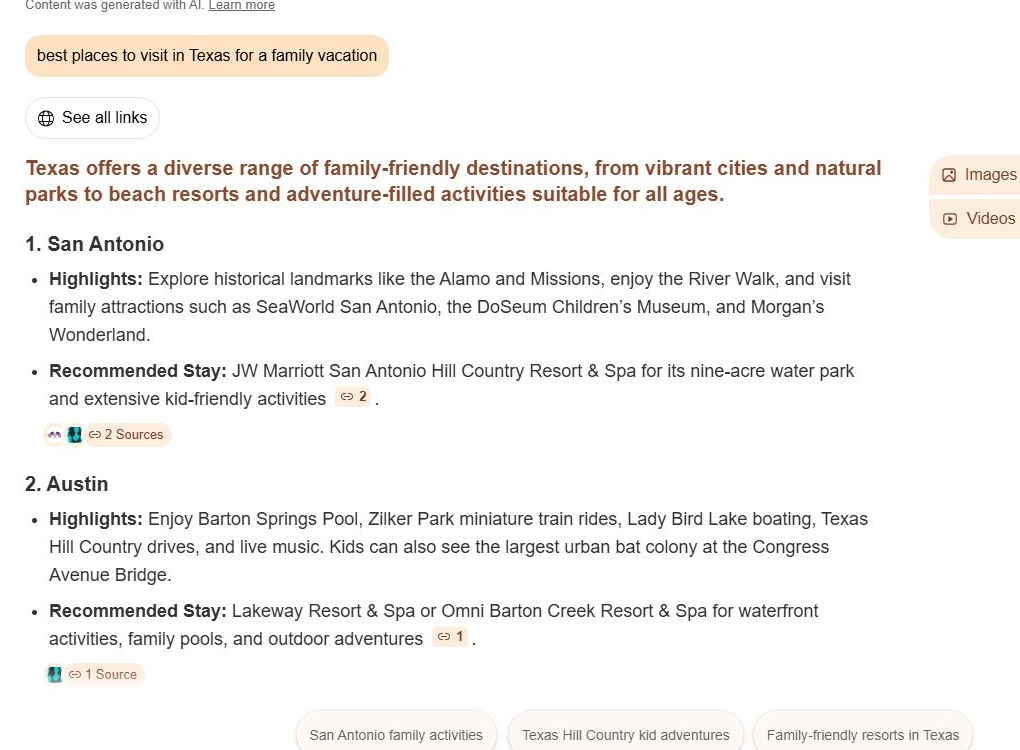
Three answer surfaces show what AI says. GA4 shows visits and actions. Search Console and Bing Webmaster Tools add search, index and crawl evidence. A technical crawl shows what needs to change on the site.

Recommendations, claims and citations

Recommendations, claims and citations

Recommendations, claims and citations

AI referral sessions and key events
Search, index and generative-AI performance
Index size, crawl errors, robots and sitemaps
Templates, redirects, canonicals and page-level fixes
Manifold independently measures these answer surfaces, runs a technical site crawl and connects authorized read-only GA4, Search Console and Bing Webmaster Tools data. Product marks identify the measured sources; they do not imply affiliation or endorsement by Google, Microsoft or OpenAI.
Are AI answers getting you right?
Be discovered
Find out if AI names your organization in unbranded category questions.
Check brand accuracy
Identify incorrect claims and the sources needed to correct them.
Compare competitors
See which organizations appear more often, on which questions, and from which sources.
Explore the report findings
These examples use anonymized findings from a published report, including AI search performance and technical site-health work.
See how often answers mention, recommend and cite the organization, followed by GA4 site activity.
Sampled AI answers followed by one month of GA4 site data.
Measured results from a published report. Organization and peer names removed.
Know what to fix first
The report includes a 90-day plan with supporting evidence, affected pages, an owner and a target date for each item.
Each row includes evidence, an owner and a target date.
| # | Action | Why it matters | Owner | Timing |
|---|---|---|---|---|
| 1 | Create one authoritative answer hub | Repeated contradictions trace to fragmented information | Shared | Days 1–30 |
| 2 | Fix crawl loops and URL variants | Important pages do not resolve consistently for search engines | Technical | Days 1–30 |
| 3 | Correct controllable facts and sources | The engines repeat outdated claims the team can address | Shared | Days 31–60 |
| 4 | Publish the missing discovery page | Competitors currently own the question group | Shared | Days 31–60 |
| 5 | Earn citations from influential sources | AI answers cite third-party sources instead of the organization | Shared | Days 61–90 |
Track changes month to month
Keeping the core panel steady makes changes between editions easier to interpret.
Agree on the market
Confirm the market, question panel and approved facts.
Record current answers
Run the same questions across all three answer surfaces.
Grade and compare
Join answers with GA4 outcomes, Google and Bing search evidence, and technical crawl findings.
Build the roadmap
Rank the work by evidence, impact, owner and timing.
What your report includes
Questions about the first edition.
Use the findings to plan ads
Recommendations use AI coverage gaps, relevant search demand, page coverage and first-party measurement goals from the report. The examples below show how these findings can inform an ad campaign.
Reach people searching now while organic coverage improves.
Use unanswered AI questions in interactive creative backed by approved facts.
Use measured in-market search behavior for display, native and video targeting.
Prioritize high-intent terms that lack organic pages or AI-answer coverage.
See how each recommendation could appear in-market, not just the tactic name.
A demand-backed search ad aligned to an approved landing page and measurable outcome.
The delivered report explains the role, pricing basis and measurement plan for every line.
Search volumes size demand; they do not forecast clicks or sales. Paid-search pricing remains subject to the live auction.
Start with an AI visibility baseline.
See where your organization appears, which competitors are recommended, what AI gets wrong and what to fix first.